ERP Systems for Singapore Small Businesses: Features, Pricing and Selection Guide
Compare ERP systems for Singapore small businesses. Covers features, SGD pricing, PSG grants, and how to choose the right solution for your SME.
Adaptels
Published 8 June 2026
TL;DR
- ERP systems centralise operations (finance, inventory, HR, CRM) into one platform
- Cloud ERP costs S$50-S$300 per user/month; on-premise starts at S$20,000+
- Singapore SMEs can claim up to 50% funding via the Productivity Solutions Grant (PSG)
- Pre-approved vendors make PSG claims straightforward — but not every SME needs a pre-packaged solution
- Custom ERP builds are worth considering when off-the-shelf tools genuinely don't fit your workflows
Last month, I sat down with the owner of a 30-person trading company who had five different spreadsheets for tracking inventory, a separate accounting system, and a Rolodex-era approach to customer management. His staff spent half their Mondays reconciling data across systems. He knew he needed an ERP, but the options overwhelmed him.
If that sounds familiar, this guide is for you.
Choosing the right ERP system for your Singapore small business is one of the highest-leverage technology decisions you'll make. A well-implemented ERP puts finance, inventory, procurement, HR, and customer data into a single source of truth — killing the spreadsheet chaos and data silos that quietly cost SMEs hours every week.
What Is an ERP System and Why Should You Care?
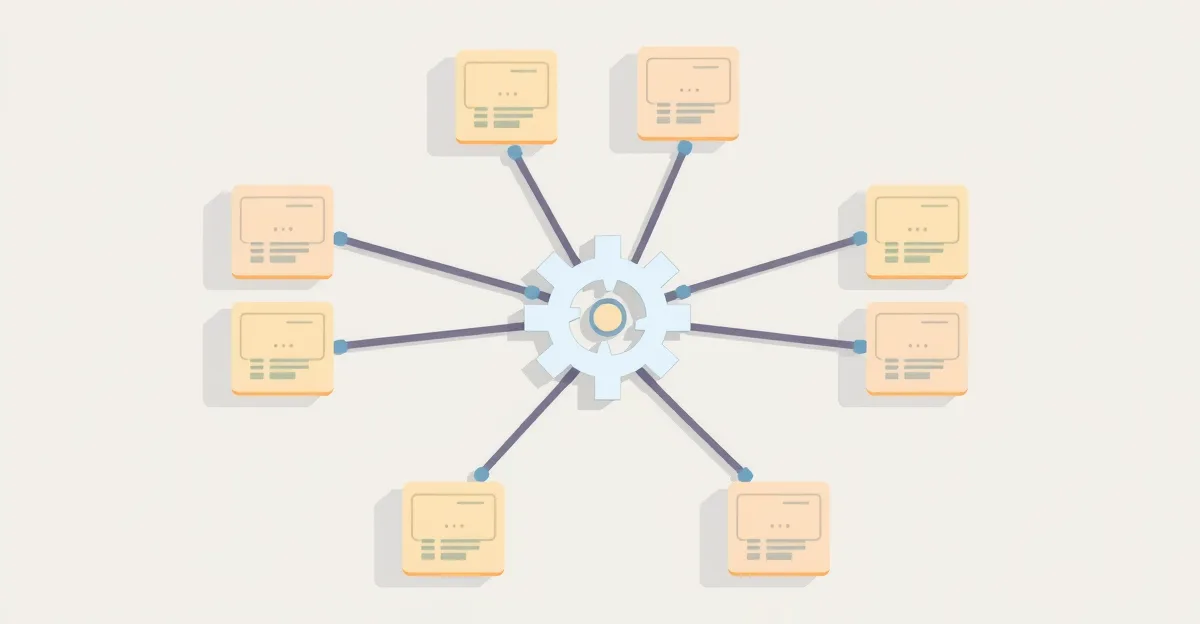
An ERP (Enterprise Resource Planning) system integrates your core business processes on a shared database. Instead of running separate tools for accounting, stock management, payroll, and sales — each generating CSVs that someone has to manually reconcile — an ERP keeps all departments working from the same live data.
For Singapore SMEs, the business case is increasingly clear. Businesses running multiple disconnected tools report spending 20 to 30% of administrative time on data re-entry and reconciliation. I've seen this firsthand with our clients — one F&B group was losing an entire day of admin time per week just matching inventory records with their accounting data.
A properly implemented ERP reduces manual admin work by roughly 20 to 25%, improves inventory accuracy to above 95%, and gives you real-time financial visibility that spreadsheets can't provide.
Core functions an ERP typically covers:
- Finance & accounting — general ledger, accounts payable/receivable, GST reporting
- Inventory & warehouse management — stock levels, purchase orders, fulfilment
- Human resources & payroll — CPF calculations, leave management, claims
- Customer relationship management — sales pipeline, quotes, customer history
- Procurement — supplier management, purchase approvals, spend tracking
- Reporting & dashboards — real-time P&L, cash flow forecasts, KPI monitoring
Features Singapore SMEs Should Prioritise
Not every feature matters equally for your business. Before evaluating vendors, figure out which modules you actually need — paying for unused functionality wastes money and complicates onboarding.
GST compliance and IRAS-ready reporting. Any ERP you deploy in Singapore must handle 9% GST correctly and generate IRAS-compliant tax reports. Some international platforms need local add-ons or configuration to handle Singapore-specific tax codes — always confirm this before shortlisting.
CPF and payroll integration. CPF contribution rules get updated periodically. Your ERP payroll module should auto-update CPF tables and generate IR8A forms for year-end filing.
Multi-currency support. If you deal with suppliers or customers in USD, MYR, or other currencies, real-time exchange rate handling and foreign currency invoicing should be standard.
Cloud-native architecture. Lower upfront costs, automatic updates, and access from anywhere. If you're weighing cloud versus on-premise, our cloud migration guide for Singapore SMEs breaks down the cost comparison.
Mobile accessibility. Approving purchase orders, checking stock, or reviewing financials on the go — a responsive mobile interface isn't optional anymore.
Integration APIs. Your ERP should connect to your e-commerce platform (Shopify, WooCommerce), payment gateways (Stripe, PayNow), and logistics providers without needing custom middleware built from scratch.
What You'll Actually Pay
ERP pricing in Singapore varies enormously. Here's a realistic breakdown.
Cloud-based ERP (SaaS):
- Micro businesses (1-5 staff, 1-3 users): S$80-S$250/month
- Small businesses (6-30 staff, 5-15 users): S$300-S$1,500/month
- Medium businesses (31-200 staff, 15-50 users): S$1,500-S$8,000/month
Annual plans typically save 15-20% over monthly billing.
On-premise ERP: Implementation costs of S$20,000-S$80,000 for a small business, with annual maintenance fees of 15-20% of the licence cost. Unless you have specific data residency or offline requirements, cloud ERP is almost always the better choice for SMEs.
Don't forget implementation costs: Software licence fees rarely tell the full story. Factor in:
- Data migration: S$2,000-S$15,000
- Staff training: S$1,000-S$5,000
- Custom integrations: S$3,000-S$20,000+
- Ongoing support retainer: S$500-S$2,000/month
Government Grants: PSG and EDG
This is where the ROI calculation gets interesting for Singapore SMEs.
PSG offers up to 50% co-funding on pre-approved digital solutions, including several ERP platforms. PSG-approved ERP vendors include solutions from Xero, QuickBooks, SAP Business One, and several local software providers listed on the IMDA Tech Marketplace. The grant compounds over time since it applies per subscription year.
EDG funds deeper transformation projects — custom ERP implementations, process redesign, and system integration work. Up to 50% of qualifying costs for SMEs (up to 70% for specific projects). Unlike PSG's pre-approved list, EDG is flexible and suited to complex or bespoke requirements.
For a step-by-step view of where ERP fits in a broader digitalisation roadmap, see our digital transformation checklist for Singapore SMEs.
Popular ERP Options Among Singapore SMEs
Xero + add-ons (best for micro and small businesses): Technically an accounting platform, but paired with inventory and payroll add-ons (Dear Inventory, Hubdoc), it functions as a lightweight ERP for businesses under 20 staff. S$40-S$120/month. PSG-approved.
QuickBooks Online: Strong accounting and basic inventory management. Good for service businesses with simpler needs. PSG-approved. S$50-S$150/month.
SAP Business One: The go-to for growing SMEs needing genuine ERP depth — manufacturing, multi-warehouse inventory, advanced reporting. S$150-S$400/user/month for cloud. PSG-approved via select partners.
Oracle NetSuite: Enterprise-grade cloud ERP that scales well. Better for SMEs planning significant growth or with complex multi-entity structures. S$1,000-S$5,000+/month.
Odoo: Open-source ERP with modular pricing. Highly customisable, growing local partner ecosystem. Community edition is free; Enterprise from ~S$30/user/month. Popular when businesses want flexibility without full custom development costs.
How to Choose the Right ERP
1. Map your processes first, not the software. Document your current workflows — where does data get entered, by whom, and where does it get lost? I always tell clients: if you can't draw your process on a whiteboard, you're not ready to buy software.
2. Shortlist based on must-have modules. If CPF payroll and inventory are critical, eliminate any vendor that handles these poorly before comparing pricing.
3. Check PSG eligibility early. Visit the IMDA Tech Marketplace to confirm which vendors are pre-approved. If your shortlisted solution is PSG-eligible, apply before committing — the application takes 4-6 weeks.
4. Demand a Singapore-specific demo. Ask the vendor to show you GST invoicing, CPF payroll, and local bank integration during the demo. International vendors sometimes underestimate Singapore-specific compliance needs.
5. Compare total cost over 3 years. Licence fees + implementation + training + integration + annual support. The cheapest monthly subscription often becomes the most expensive solution after hidden customisation costs.
6. Evaluate data security and compliance. Your ERP holds sensitive employee, financial, and customer data. Make sure the vendor complies with Singapore's PDPA. ComplyHQ can help you assess your data protection readiness.
When a Custom ERP Makes More Sense
Pre-packaged ERP systems are designed for the average business. If your operations involve non-standard workflows — specialised manufacturing processes, complex commission structures, unique inventory logic, or deep integration with proprietary industry platforms — you may end up paying heavily to configure something it wasn't designed to be.
We've built custom business management systems for a few clients in exactly this situation. One was a logistics company whose commission and driver allocation model was so specific that no off-the-shelf ERP could handle it without extensive (and expensive) customisation. We built a purpose-made system that did exactly what they needed, without paying for modules they'd never use.
The development cost is higher upfront, but you eliminate recurring licence fees for users who don't need a full ERP seat. Custom builds are also EDG-eligible — making the grant a meaningful cost offset.
ERP and AI: What's Coming
Modern ERP platforms are incorporating AI capabilities — demand forecasting, anomaly detection in financial data, automated invoice matching, intelligent reorder triggers. For SMEs, this represents a real productivity multiplier on top of an already-efficient system.
If you're exploring how AI fits alongside operational software, our guide on how Singapore SMEs can use AI to save time covers practical starting points. AI-powered invoice automation pairs naturally with ERP finance modules — our guide to automating invoicing for Singapore SMEs goes deeper on this.
The Bottom Line
An ERP for your Singapore small business isn't a luxury — it's increasingly a baseline requirement for operating efficiently as you scale. With PSG co-funding of up to 50%, the financial barrier is lower than most owners assume. The critical decision isn't whether to adopt ERP, but which type: a pre-approved SaaS solution for straightforward operations, or a custom-built system for businesses with complex, differentiated workflows.
Start by mapping your processes, shortlisting grant-eligible vendors, and running Singapore-specific demos before committing. The right ERP pays for itself within 12 to 18 months in recovered staff time alone.
Sources
- IMDA Productivity Solutions Grant (PSG) — Official PSG programme details, eligible solutions, and application process
- Enterprise Singapore — Enterprise Development Grant (EDG) — EDG eligibility criteria, funding levels, and qualifying project categories
- IRAS GST for Businesses/gst-and-digital-economy/local-businesses) — Singapore GST compliance requirements relevant to ERP finance modules
- IMDA SMEs Go Digital Programme — Singapore's national SME digitalisation initiative and sector-specific digital roadmaps
- Personal Data Protection Commission Singapore (PDPC) — PDPA obligations for businesses handling personal data in ERP systems
Need help with your project?
Adaptels builds custom web applications and WordPress sites for Singapore SMEs. Let's discuss how we can help your business grow.
Get in Touch →Related Articles
ChatGPT for Singapore Businesses: Practical Use Cases and Getting Started
A practical guide to ChatGPT for Singapore businesses — real SME use cases, realistic SGD costs, PSG grant tips and how to get started safely and productively.
sme-technologyCybersecurity Basics for Singapore SMEs: Protecting Your Business Online
Learn essential cybersecurity basics every Singapore SME needs — from PDPA compliance to affordable security tools. Protect your business online with practical steps.
sme-technologyDigital Transformation for Singapore SMEs (2026): Where to Start and What to Prioritise
A practical guide to digital transformation for Singapore SMEs in 2026. Learn where to start, what to prioritise, and how to leverage PSG and EDG grants.